
Progress vs platform
The hidden tension shaping legal technology in 2026

Mid-sized law firms are entering 2026 with cautious confidence and bold ambition
Research from LPM’s Frontiers Report shows that mid-sized law firms are entering 2026 with cautious confidence, despite economic pressures and increased competition.
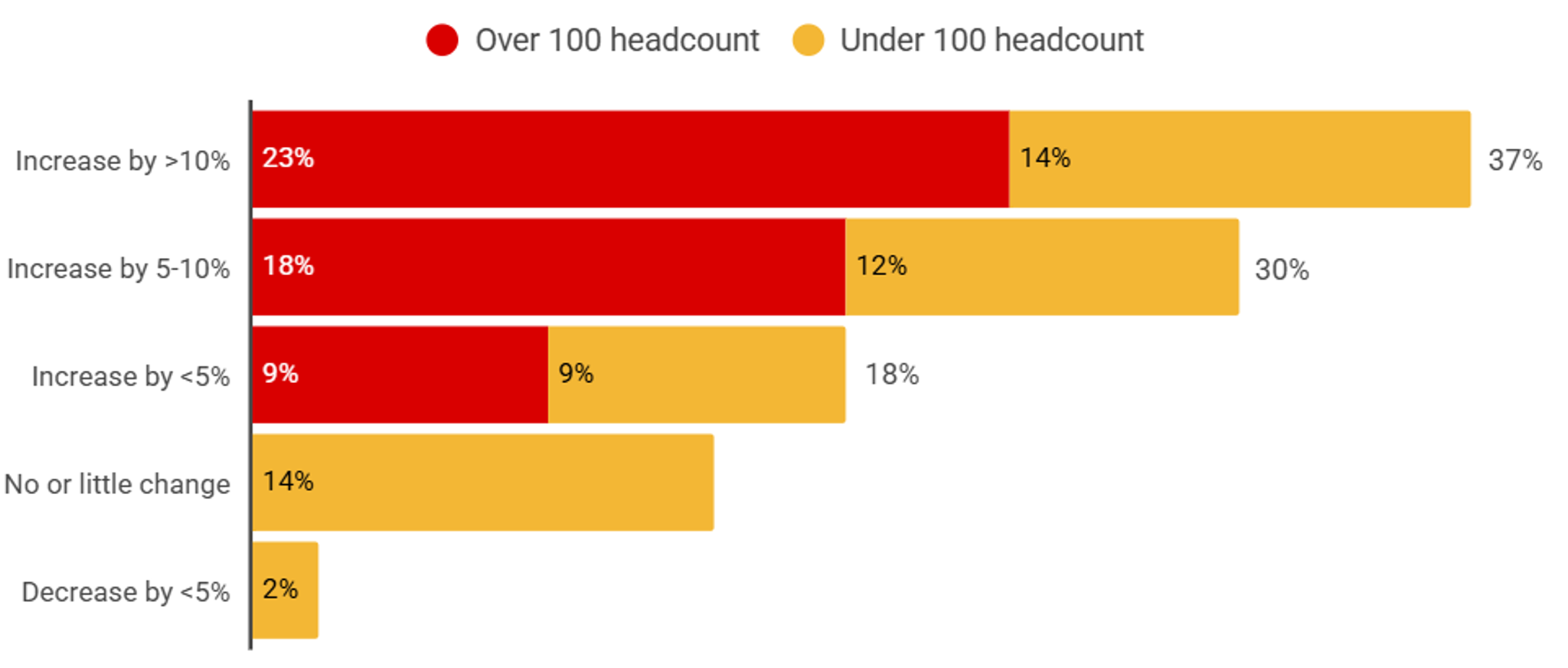
Almost 40% of firms expect revenue growth of more than ten percent in 2026, with a further 30% aiming for 5-10%.
Growth plans will be driven by automation, client experience and data
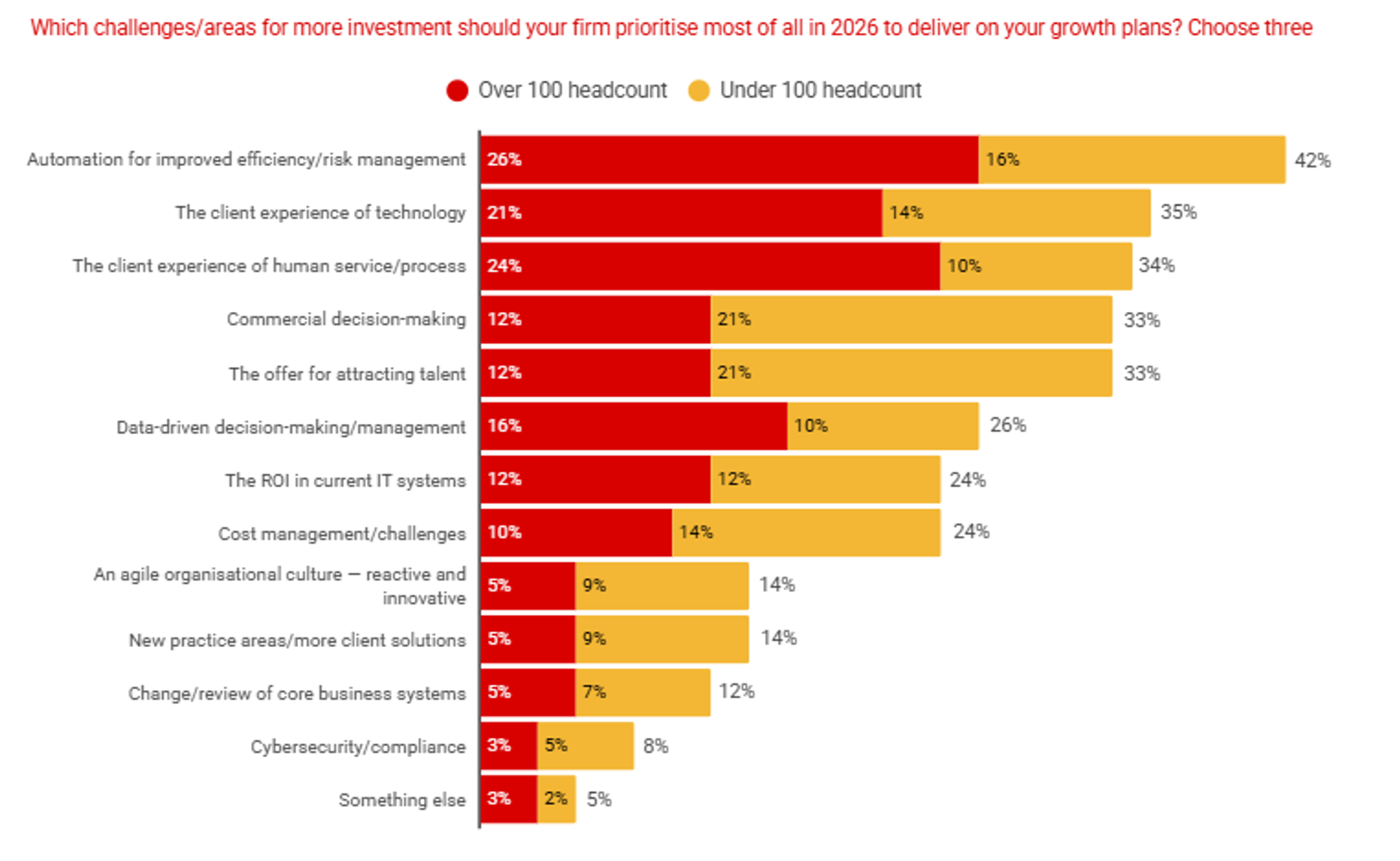
When asked which areas are most critical for growth and success in 2026, three themes reached the top spot...
- The first is automation for efficiency and risk management. Firms recognise that manual processes introduce cost, inefficiency and operational risk.
- The second is improving the client experience, through both better technology and more consistent processes.
- The third is the ability to make data-driven decisions, giving leaders greater visibility and control over performance.
Alongside these priorities, firms are also focused on their people, including incentives, career progression and learning and development, all of which link closely to how effectively the business operates.
Technology investment is increasing to support these priorities
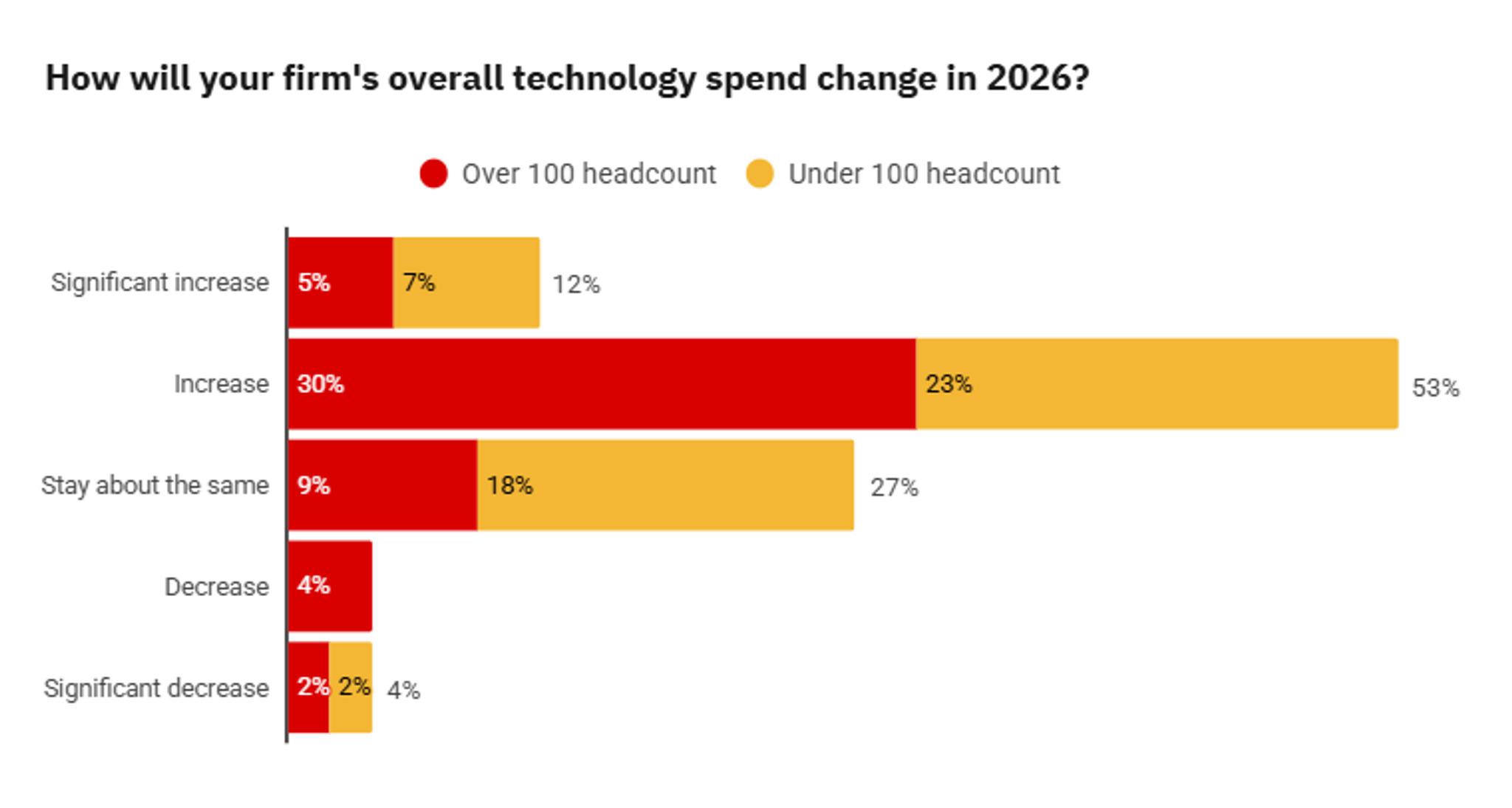
More than half of firms say their technology spending will increase in the year ahead, and most leaders feel positive about their overall modernisation journey.
However, progress is often slowed by a small number of persistent barriers. These include identifying suppliers that meet specific needs, managing the cost of change, limited internal bandwidth to oversee transformation, and uncertainty around the maturity of new technologies.
This creates a situation where intent is clear, but execution is often uneven.
The shift to the cloud is accelerating across the sector
The legal sector is now firmly moving toward cloud-based technology.
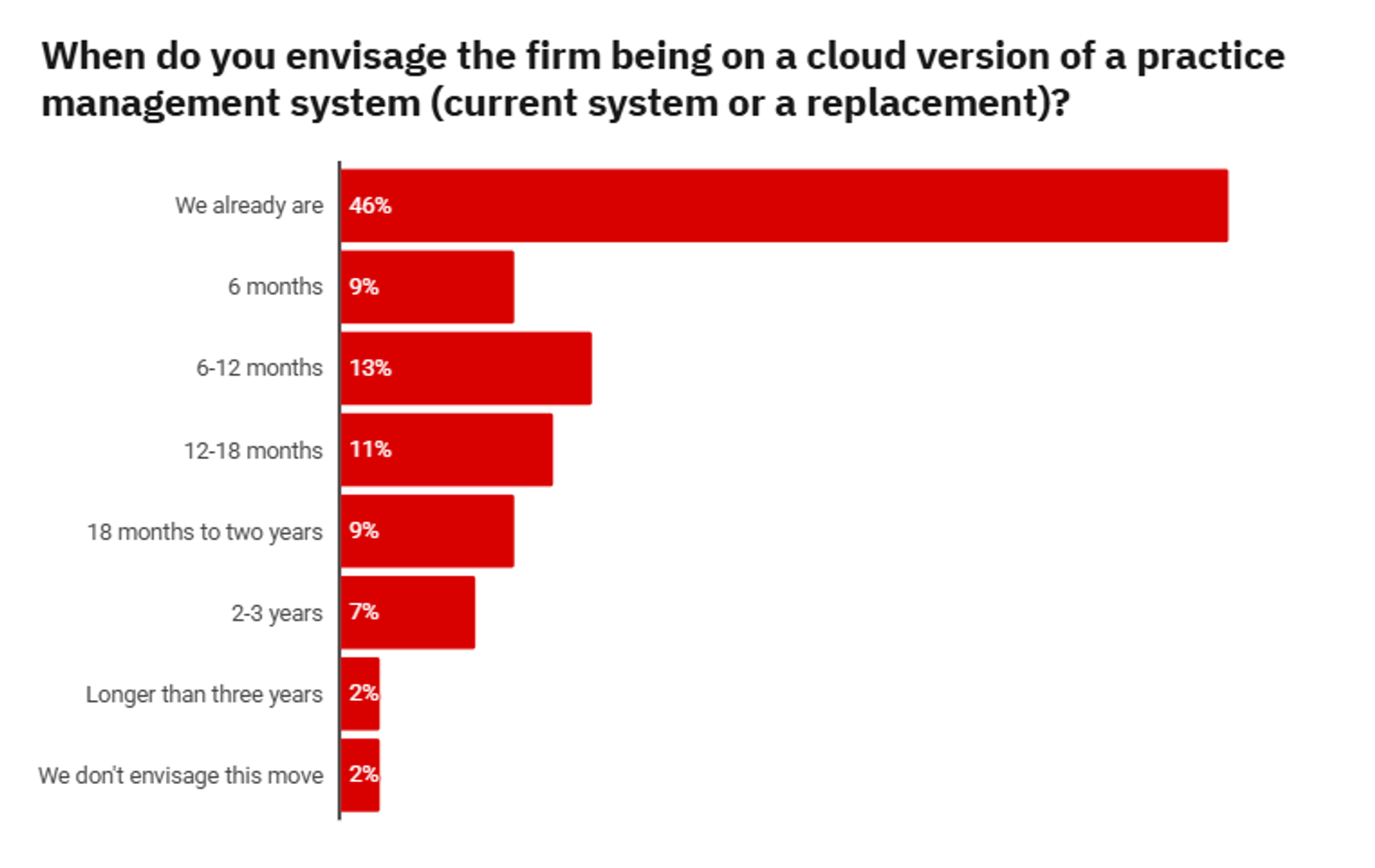
Around half of firms already operate their practice management system in the cloud, with the remaining firms planning to move within the next two to three years.
Across the broader technology landscape, around four fifths of firms now either operate cloud systems or follow a cloud-first strategy.
The motivations behind this shift are clear. Firms want to create more efficient and productive employee experiences, manage operational risk, control technology costs, access better data, and improve the digital client experience.
However, cost and legacy technology remain the biggest barriers preventing faster migration.
It is also not always clear how many firms have moved to true cloud-native platforms, rather than simply hosting legacy systems in a cloud environment.
Artificial intelligence is now firmly on the agenda for most law firms.
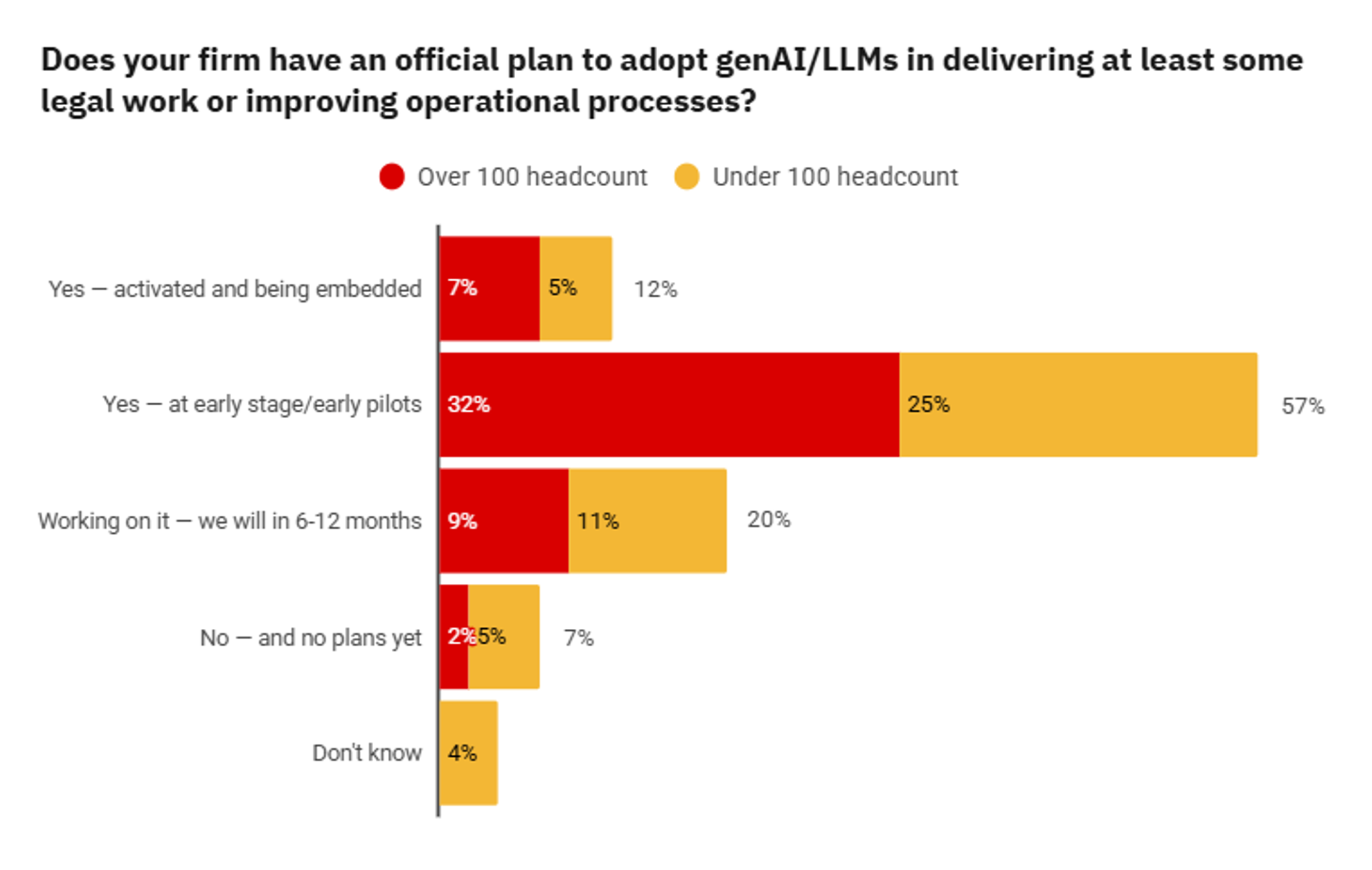
The research shows that 56 percent of firms are already running early stage AI pilots, while a further 12 percent have begun embedding AI into operations. Another group expects to implement AI within the next year. It’s not clear what the depth of these AI explorations is, however: there is a world of difference between playing with Copilot to speed up document drafting, and embedding agentic AI-driven workflows into complex case work!
AI is expected to deliver meaningful time savings
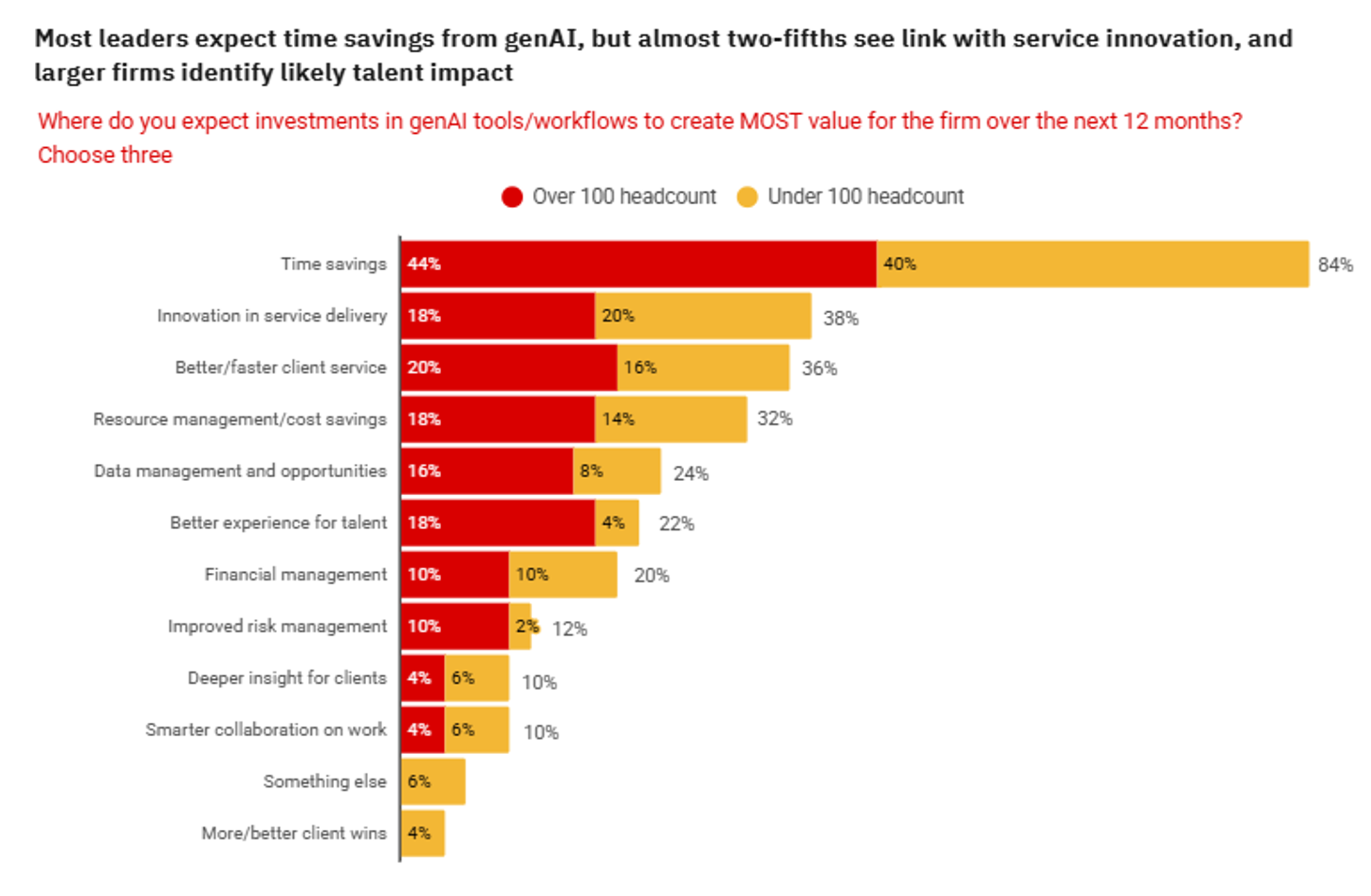
More than 80 percent of leaders believe AI will save significant time, particularly in tasks such as drafting and research.
Alongside efficiency gains, 39 percent of leaders also see AI as a driver of innovation in service delivery. They expect it to enhance the client experience through faster, more responsive service and improved overall quality.
However, many firms are still in the early stages of turning experimentation into structured strategy...
The biggest barriers to AI adoption
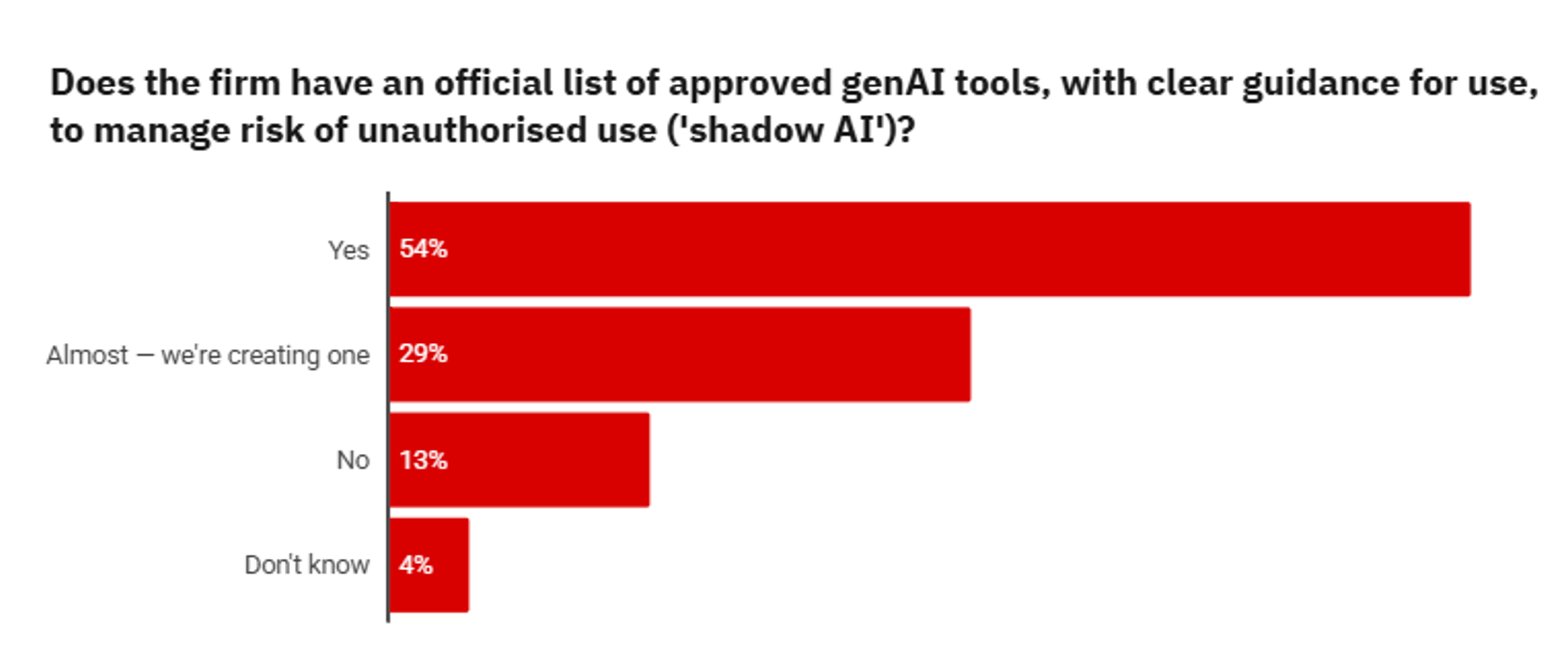
Only around half of firms currently have an approved list of AI tools and clear guidance on their use, leaving room for unmonitored AI use that bypasses security across organisations.
The biggest barriers to wider AI adoption are:
- Concerns about accuracy and quality
- Information security risks
- The cost of solutions and implementation
- Lack of internal resources to explore and manage AI tools
These concerns reflect a sector that sees the opportunity of AI clearly but is still working through how to deploy it safely and effectively.
Talent pressure returns and the modern lawyer is evolving
The competition for talent is rising again across the legal sector.
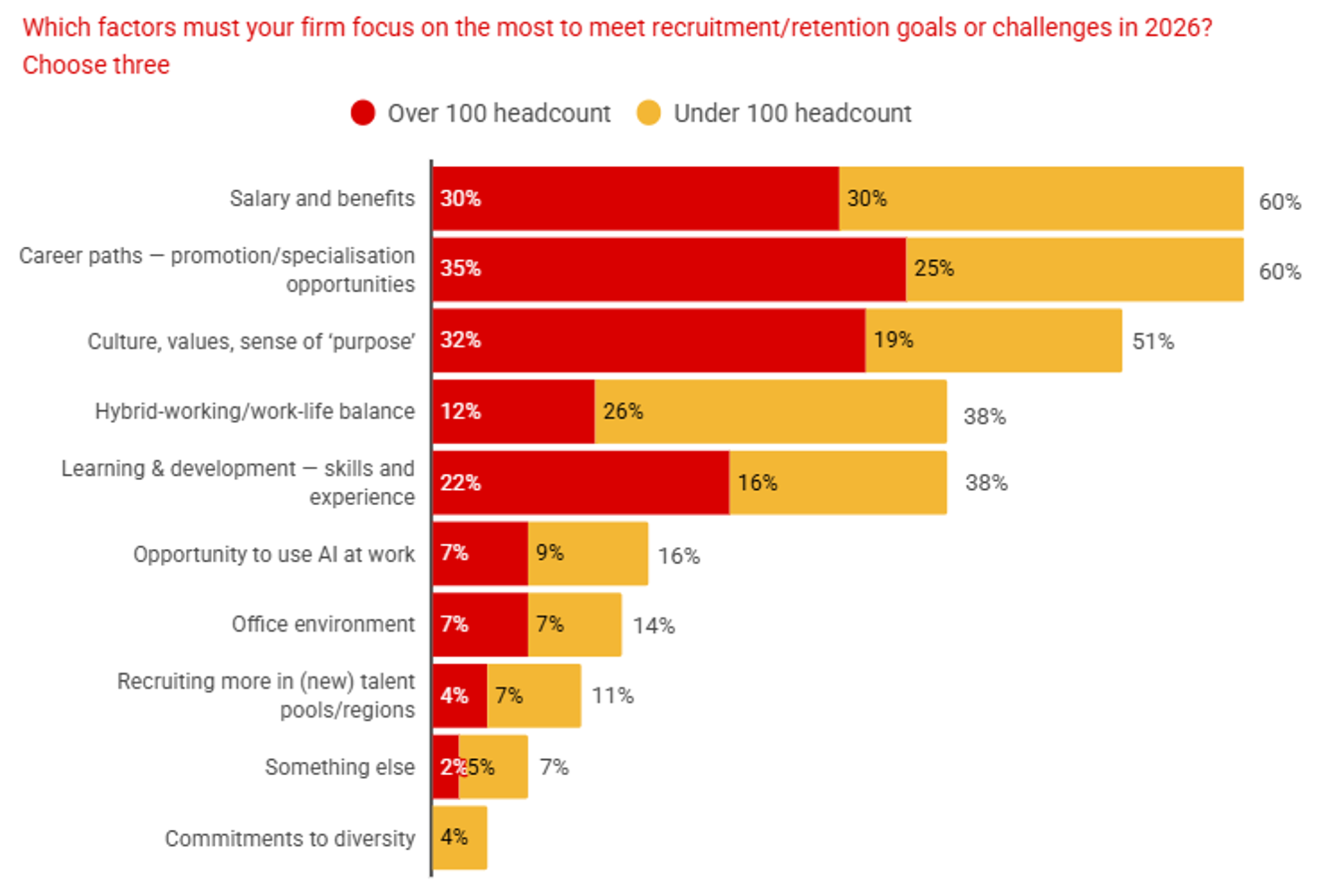
Firms say the most important areas for addressing recruitment and retention challenges are salary and benefits, career path opportunities, organisational culture, learning and development opportunities, and hybrid working policies.
This renewed focus on the employee experience reflects a wider shift in how lawyers evaluate their employers. Technology plays a growing role here.
As firms adopt AI tools and digital workflows, the skills required by lawyers are evolving. Future learning and development programmes will increasingly need to include training around AI tools, data literacy and technology enabled legal delivery.
For many lawyers entering and continuing in the profession, access to modern tools to learn these new skills will become an important factor in choosing where they build their careers.
The integration gap: where firms may be leaving value on the table
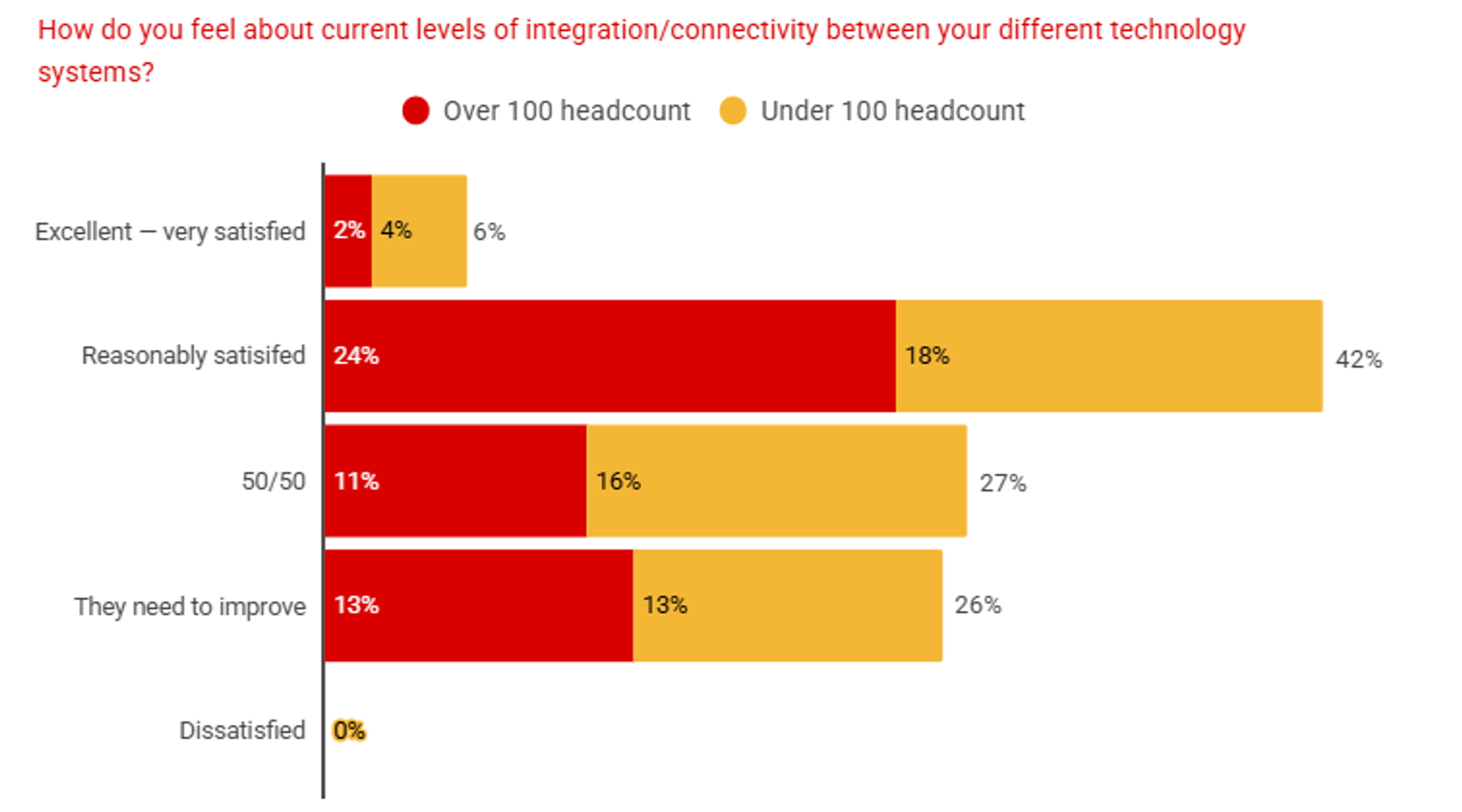
One of the most revealing findings in the research concerns the connectivity between technology systems.
Less than ten percent of firms say they are very satisfied with how well their technology stack integrates, while a quarter believe significant improvements are needed.
Disconnected systems are limiting performance and insight
This lack of integration can have wide ranging implications.
Disconnected systems create data silos, limit automation opportunities and make it harder for firms to gain meaningful operational insight. They also prevent LLMs from accessing the structured data needed to deliver more meaningful results.
Building the foundations for the next generation law firm
The findings suggest that many law firms are entering a new phase of technological maturity.
Leaders are ambitious and know what they need to work on. They understand the opportunities presented by cloud applications, automation, data and AI, so they are investing more in technology and exploring new tools.
But the firms that gain the greatest competitive advantage will be those that focus not only on brand-new technologies, but also on the foundations that make them work.
Modern cloud native systems, integrated data environments and automation ready workflows will determine how far firms can go with AI and other innovations. Firms that invest in a modern, connected platform like Tessaract can align this ambition with execution.
For those that delay, the gap between ambition and capability will continue to widen.

Building the foundations for future growth
Many firms are focused on improving efficiency, increasing visibility and preparing for AI-driven ways of working. Achieving those goals requires more than additional tools. It requires a connected platform.
Tessaract brings legal matter management, legal accounting, reporting, legal workflow automation and integrations together in a single cloud-native practice management system. By connecting data and processes across the firm, leaders gain better visibility, fee earners spend less time on administration and firms are better positioned to support future growth and transformation initiatives.

FAQs
Legal tech insights from the Tessaract team

Why law firm data needs to leave the boardroom
Law firm leaders generally feel well informed. In our research with LPM, Mind the Delivery Gap, 80% say leadership has sufficient visibility into performance, while 79% believe their legal management information supports effective decision-making.


Why data driven fee earners are a competitive advantage for law firms
Law firms have never had more data. The challenge is making sure the right people can access the right information at the right time. Our Mind the Delivery Gap research, produced in partnership with LPM, found that 79% of firms believe their management information supports decision making effectively, and 80% say leadership has sufficient visibility into firm performance. However, there is a significant disconnect. Only 14% of respondents said the information they need is always available, and 29% believe providing better insight to fee earners should be an essential investment priority.

When systems don't connect, your IT team becomes the integration layer
They appear as a report that needs to be manually reconciled before it can be trusted. A user raises another support ticket because two systems show different information. A spreadsheet quietly becomes essential to a core process. A member of the IT team is asked to extract, reformat and move data between applications because there is no reliable way for it to flow automatically.

Measuring matter profitability remains a challenge for law firms
Every pricing decision, hiring decision and growth plan depends on understanding one thing: which matters actually make money. Yet our Mind the Delivery Gap research, produced in partnership with LPM, found that only 18% of firms are completely confident in their ability to assess matter profitability. A further 38% say their view is inconsistent or inaccurate, while 67% of leaders report that users experience frustrations with their core systems.

Can your law firm grow without adding more operational pressure?
Growth is firmly on the agenda for mid-size UK law firms. According to Mind the Delivery Gap, our research completed in partnership with LPM. 44% expect moderate organic growth, 33% are pursuing geographic growth and 20% anticipate growth through mergers and acquisitions.

Does legal practice management software need accounting?
When law firms replace their legal practice management software, accounting is increasingly becoming part of the same conversation. Our recent discussions with law firm buyers show firms looking for systems that combine practice management, legal accounting, billing and client money management, rather than treating finance as a completely separate technology decision.

Mid-size law firms flock to the cloud: Why cloud native software is now your best bet
The legal sector is entering a new phase of digital transformation. What was once considered a gradual shift toward cloud technology has now become a clear industry movement.

What is legal practice management software and what should it actually do?
Choosing legal practice management software is one of the most important technology decisions a law firm can make. Yet many firms still evaluate systems based on feature lists alone.

Is technology becoming a deciding factor for potential employees?
Recruiting and retaining talent remains a persistent challenge for mid-size law firms. They are competing with larger firms that can often offer higher salaries, structured career progression, and more established remote working options.

What processes are mid-market law firms automating and where should you start?
One of the greatest benefits of modernising your practice management software is the ability to automate more processes across your firm. Automation helps streamline operations, eliminate workarounds, and reduce manual tasks that otherwise occupy fee earners and support staff’s precious and often, expensive time.